

This week’s Canada-China Brief offers exclusive insight into major developments shaping the bilateral relationship:
Hitting the road: Understand how Chinese EVs are beginning to enter the Canadian market and where Washington wants Canada to go in reverse
Data Dive: See the key numbers, charts, and analysis behind global energy market shocks as Canada adds new pipeline capacity to the West Coast
Expert voices: New analysis from experts in both Canada and China sheds light on a full view of world events and their impact on the bilateral relations
Subscribe for just $5/month or $50/year to access full analysis, stay ahead of the curve on Canada-China relations, and support independent, policy-driven coverage.
Data Dive
The takeaways:
China’s imports of LNG have fallen to 3.5 million tonnes in April according to data provider Kpler, approximately 30% lower than a year ago
The decline represents the lowest level of Chinese LNG imports since 2018 under the backdrop of the ongoing closure of the Strait of Hormuz
China’s total LNG imports in 2025 amounted to 68.43 million tonnes with Qatar representing its second-largest supplier
What’s next below the paywall:
Where the newly-approved Sunrise Expansion Project pipeline fits in the greater export capacity expansion for LNG on the West Coast
Tracking daily pricing data on Brent, West Texas Intermediate, and Western Canadian Select oil in the post-Iran war shock
IPD highlights the numbers that matter. Access more data analysis below the paywall by subscribing now for just $5/month.
Top Story
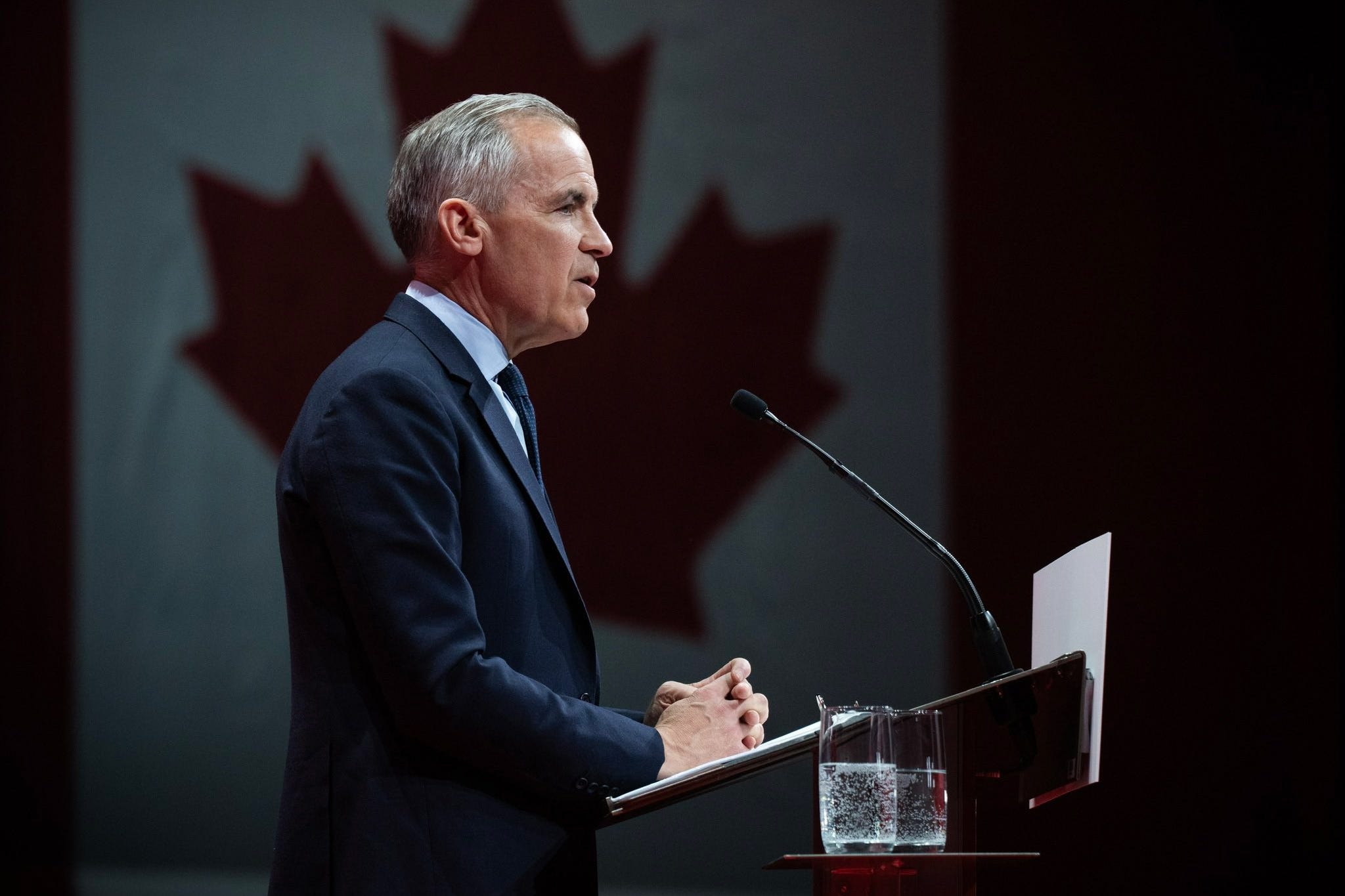
Under U.S. Scrutiny, Ottawa Accelerates China Engagement
Carney’s counter — With CUSMA up for review this July, Washington has seized on Ottawa’s economic diplomacy with Beijing:
Speaking in Washington this past month, U.S. Commerce Secretary Howard Lutnick stated that “Carney has a problem with us; he gets on a plane and he goes to China. Does he think China’s going to buy his stuff?… He came back and said, ‘Oh, we’ll take their electric cars.’ I mean, is this nuts?”
U.S. Ambassador to Canada Pete Hoekstra said at the end of March that “those cars can come in from China, come into Canada, but they’re not going to cross the border into the U.S. That ain’t gonna happen… We’re not going to open the floodgates to Chinese cars entering the U.S. from Canada.”
In Congress, top Democrat Chuck Schumer joined other senators in a letter addressed to President Donald Trump, writing to “ask that your Administration take further action to prohibit Chinese vehicles manufactured or titled in Canada and Mexico from entering the United States.”
Prime Minister Carney has pushed back on broader U.S. demands for Canadian concessions to even begin CUSMA talks, saying that “we understand some of what the Americans would call trade irritants or trade issues,” adding that “it’s not the case that the United States dictates the terms.”
Doubling down — The barbs come as the federal government’s Spring Economic Update further committed to Chinese investment attraction:
The fiscal update published this past week underscored how Ottawa “will also seek ways to attract new investment, including by leveraging the recent arrangement on electric vehicles with China” in an effort to “diversify Canada’s auto export markets, and position Canada as a global leader in electric vehicles.”
International Trade Minister Maninder Sidhu concluded a trade mission to southern China last month, visiting the facilities of China’s BYD, XPeng and Guangzhou Automobile Group to discuss “market-entry pathways” and “longer-term opportunities for investment and collaboration.”
Finance Minister François-Philippe Champagne stopped in China before Sidhu to elevate financial cooperation with Vice Premier He Lifeng, institutionalize central bank consultations, and hold talks with China National Offshore Oil Corporation (CNOOC) Vice President Yu Jin.
CNOOC was previously committed to purchasing from the Woodfibre LNG project in BC that is set to be completed in 2027, was contracted to supply the construction of LNG Canada’s first phase facilities in northern British Columbia, and actively operates oil sands assets in Alberta.
Ottawa signed off on Enbridge’s $4 billlion Sunrise pipeline expansion late last month, which is set to enable natural gas flows to supply the Woodfibre LNG terminal that is intended to serve Asian markets, of which China represents the region’s largest consumer.
What commentators are saying — From government to private sector, industry players are increasingly weighing the China to Canada channel:
Chairman Yin Tongyue of Chery, after inviting two dozen Canadian dealership representatives to the Beijing Auto Show, said that “Canada is relatively open. Some potential partners really want us to enter the market… we’re looking at several options — either brownfield, greenfield or joint ventures.”
Former Prime Minister Justin Trudeau recently told a business conference in Singapore that the U.S. is “threatening the Canadian auto industry, where we’re now having to look at working with China because the American industry doesn’t want to work with us anymore.”
Ontario Premier Doug Ford expressed concern “when we get undermined and auto workers get undermined by cheap Chinese parts and vehicles,” but said his government will ensure any Chinese company “understands that they need to build Ontario-made cars with Ontario workers with Ontario parts.”
Industry Minister Mélanie Joly commented on talks with automaker Stellantis to leverage its Chinese partner to manufacture in Canada, noting that “any new auto investments will prioritize Canada’s supply chain, including Canadian labour and parts suppliers… there needs to be localization — it is fundamental.”
From the Experts
IPD brings what scholars and opinion leaders in China and Canada have to say on the challenges both countries face.

Louis-Vincent Gave
CEO, Gavekal Research | WATCH
The U.S. has made it pretty clear, for example, that there’s very narrow limits as to how much they’ll allow Mexico or Canada to integrate with China. They’re not keen at all on those two countries that are very close to the U.S. and with whom the U.S. has free trade deals and free trade organization, etc. There, I think, there’s some pretty strong red lines…
If you’re Canada, the problem you face today is that for the past 50 years, you’ve essentially built your economy to service the United States, whether for industry or for commodities.
You never bothered to build pipelines or LNG terminals on your oceans — always had them facing south to sell to the United States. And so you’re now facing a crisis where you say, “okay, I need to de-Americanize my supply chains.” Canada needs to de-Americanize not so much its supply chain as much as its client base.
Deep down, I actually think that all everything that’s unfolding will turn out to be very bullish for Canada because they’re going to finally get the infrastructure spending done that they’ve been needing to get done for 15 years and never did because politically it was hard. Now there’s a political realization that, “okay, we need to get it done, so let’s make it happen.”
The Word in China

Li Yan
Director, Office of the President, China Institutes of Contemporary International Relations | READ
Canada and the five Nordic countries have vowed to seek closer ‘middle power’ cooperation, a strategic effort to preserve national sovereignty. The move exposes a rift in the U.S.-led alliance system, which faces multiple uncertainties, including internal coordination challenges and U.S. pressure…
Donald Trump’s ‘America First’ policies have unsettled U.S. allies. His tariff bullying, disregard for national sovereignty and demands for increased defense spending have made the six countries acutely aware that dependence entails risk. As Carney put it, “If we’re not at the table, we’re on the menu,” a remark that lays bare the existential anxiety and strategic recalibration of middle powers in the face of ‘America First’…
If the U.S. remains wedded to unilateralism, more allies may begin to drift away; countries that advocate multilateralism, on the other hand, could gain strategic opportunities for mutually beneficial cooperation with this new alliance. Realignments in international relations may follow across major issues shaping the international landscape, such as tensions in the Middle East and the Russia-Ukraine war.

Zheng Xiaoling
President, Canada International Trade Promotion Society | READ
The current period is a good time for Canadian companies to enter or expand in the Chinese market… For companies that are well-prepared and strategically focused, the situation is shifting from a ‘wait-and-see phase’ to a ‘positioning phase’. Recently, we have clearly seen an increase in inquiries, a recovery in on-site visits and matchmaking activities, and companies with an existing presence are increasing their investment. Some companies have already begun actively seeking partners and distribution channels.
[Carney’s] visit sent a very important signal — communication channels are being restored and the willingness for cooperation is increasing. Companies’ expectations of the policy environment are becoming more stable. Although we may not see explosive growth in the short term, the restoration of confidence itself is the most critical first step…
Under the broader context of global supply chain restructuring, the complementarity between China and Canada will not change, which remains the most solid foundation for cooperation. If both sides continue to send positive signals, I believe bilateral economic and trade relations will gradually return to a more rational, pragmatic and sustainable development track.
What’s next below the paywall:
Global oil price shock data as well as where BC’s LNG export capacity is growing
Da Wei: Professor and Director, Center for International Strategy and Security, Tsinghua University
Chen Wenxin: Director, Institute of American Studies, China Institutes of Contemporary International Relations
See more data and commentary below the paywall by subscribing now for just $5/month.
Thanks for reading the Canada-China Brief from the Institute for Peace & Diplomacy! Join a free trial now for full access to Data Dive and The Word in China coverage below, including extended analysis and translated expert commentary